

MANUS AI (ACQUIRED BY META) - NO. 01
Designing an AI community platform to drive adoption
InternshipApproved & In Dev

As Product Design Lead, I led a team of 3 designers to support Conduit Commerce’s Copilot launch. Conduit is a fintech backed by Dragonfly and Altos Ventures, and I worked directly with the founder, recognized on Forbes 30 Under 30, to align the design with the product’s technical ambition and the practical needs of their B2B customer base.
Conduit Copilot is an AI that streamlines the entire buying and selling process for wholesale and distribution businesses, an industry that still ran on spreadsheets and phone calls and was largely unfamiliar with AI adoption. The product was a genuine leap forward. Our job was to make sure their branding and website said so.
My Role
Leading product design, company branding, UX strategy, design system creation, UX copywriting, and usability testing.
3 months
2 UX Designers (me!)
1 UX Researcher
1 Marketing Designer
1 Founder
1 PM
Results
Problem
Conduit Commerce is a B2B SaaS and CaaS platform built for a specific, underserved audience: the people who buy and sell physical goods in wholesale and distribution. Think carpet sellers, materials buyers, regional distributors. Their product suite spans four pillars: Copilot, Ops, Wholesale, and Dropship.
Conduit was looking to expand toward more tech-savvy, modern clients without losing their core base, Midwest wholesale buyers. It’s a challenge of acquisition and retention at once, and it all comes down to how the brand, design, and copy position the product. Especially with their newly launched Copilot.
Solution Preview →
User lands on website
Explores Copilot
Understands Conduit’s Core
Books a Demo
Initial Pivot
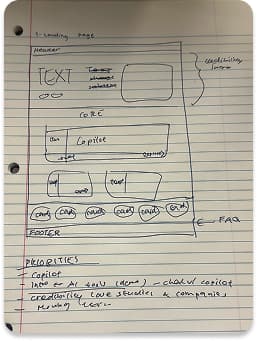
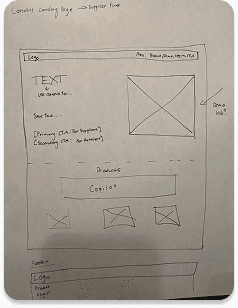
To rapid LoFi prototype, I split my team into 2 designers each team and produced 2 prototypes for our IA architecture. Then we compared and contrast and saw what we could do better from each other. I did this so we both could come up with original ideas. Instead of having the entire team think of one basis, I wanted everyone to come up with different ones first. Then we presented it to Conduit’s PM and then we pushed it to Claude.
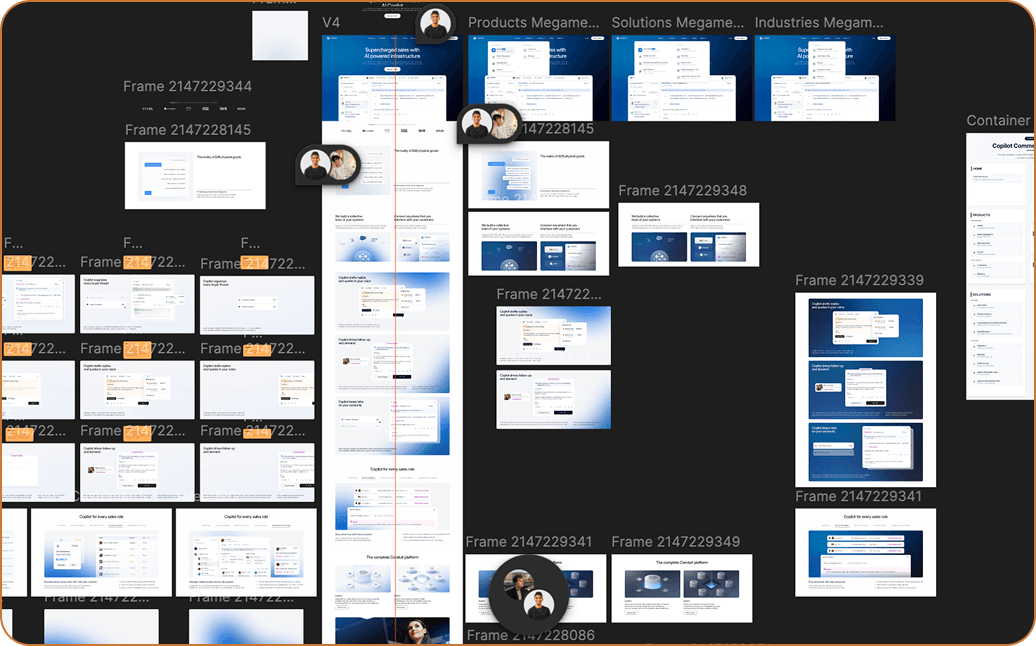
I used Claude to expedite the IA exploration and system-level thinking in this phase for quick usability feedback.
After getting feedback used Framer to prototype the visual direction. The first design round drew inspiration from a design trend. Ukiyo-e Japanese woodblock prints, a nature-forward visual language with texture, warmth, and mountain landscapes. It was distinctive. Intentional. And it communicated absolutely nothing about what Conduit Commerce did for a wholesale distributor.
Research
“Sometimes, the website wouldn't even load for me.I think it has too much things going on there. Usually, I just prefer contacting their customer service immediately.”
“I went straight to Copilot but I still don't know how it connects to Ops or Wholesale. Is this one platform or separate tools?”
“I get that it's AI for suppliers and retailers, but what does it actually do? ‘Proactive outreach’ doesn't tell me anything.”
Drag to cycle through quotes
4 out of 7 current users reported the site failed to load entirely on slower connections, before they even saw the product.
A lot of potential users, who weren’t used to Conduit, didn’t understood the products they were selling.
8 out of 11 users in testing described the first design as a lifestyle brand, not a B2B operations tool.
Core Users (7)
Potential Users (4)

Age: 35-40+
Can't load the site reliably on slower connections, causing them to leave before seeing the product at all.
Wants to know how to optimizetheir Conduit subscription (majority of them didn't even know of the Copilot launch).

Age: 25-35
Doesn't understand how Conduit's products connect, whether Ops, Dropship, and Wholesale are one system or separate tools.
Wants a clearer picture of how everything fits together before committing to a demo.
Finding the gaps in the market →
Strong B2B buyer focus
Clear supplier/retailer split
Category-specific only
No story-telling components
Outcome-led copy
Strong trust signals
No AI positioning
Not operations-focused
Feature-rich and functional
Clear product hierarchy
Not aesthetics heavy
Built for technical buyers only
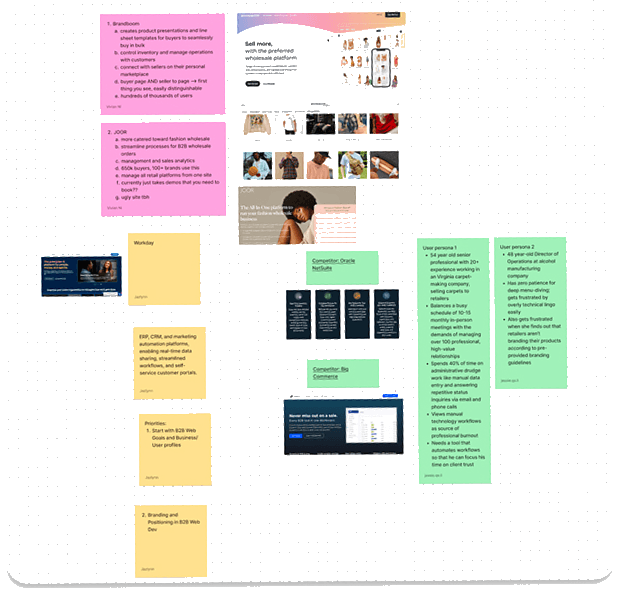
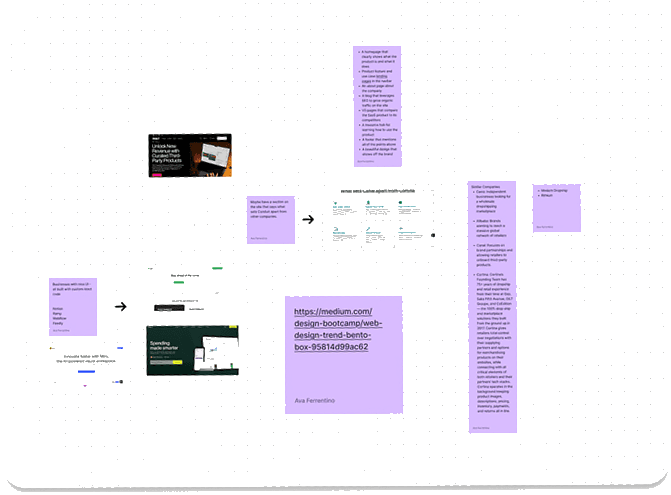
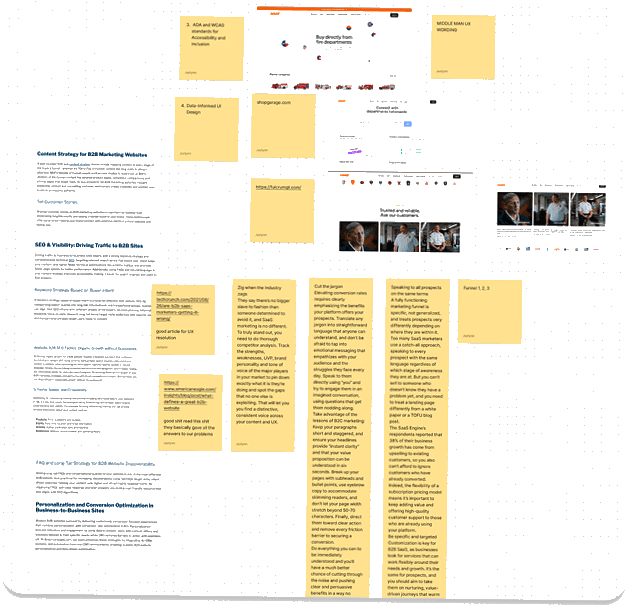
None of them were competing on aesthetics. They were competing on clarity and function.
The best performing B2B sites led with outcomes, not features. Plain language over industry jargon.
Conduit didn't need to out-design its competitors. It needed to out-communicate them. Clarity and functional UX copy were the gaps nobody in this market was filling.
Conduit is one of the first to implement AI into wholesale operations at this level. Users had no reference point for what that even meant. In situations like these, the words and the simplicity of the UI do more work than any visual treatment ever could.
How might we... write UX copy that sells the product?
How might we... create animations that demonstrate?
Development
I contributed to the finalized design system. Link here.
The founder wanted to mirror competitor sites. I pushed back. Not because the competitors looked bad, but because their audiences were different. B2B SaaS for coastal tech buyers has different visual expectations than a wholesale operations tool for Midwest distributors. Designing for your actual audience rather than your aspirational peer set is a harder sell internally, but it’s the right call. The testing data backed it, and the first design failure proved the point before the argument was fully resolved.
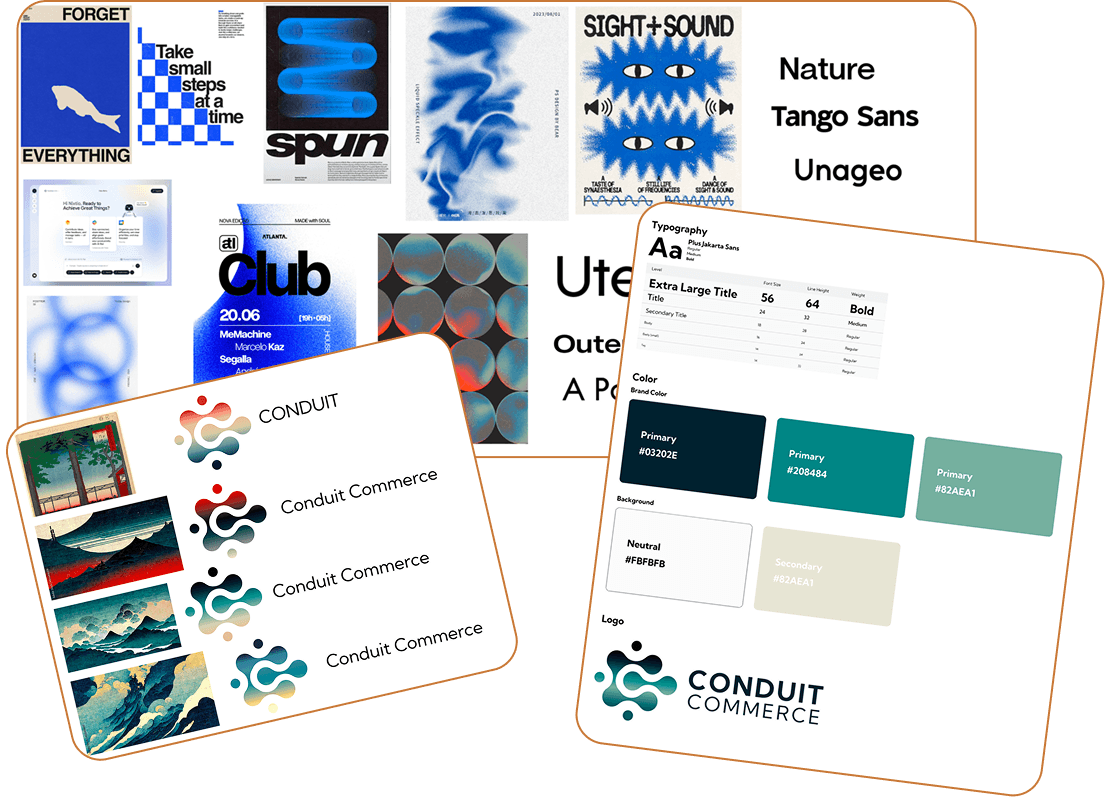
We were aiming for something original but sleek. Modern without being cold. After multiple iterations and mood board explorations, we landed on a design system built around shades of blue with soft gradients. We deliberately avoided sharp, rigid shapes. Conduit needed to feel flexible and inviting, something that pulls users in rather than presenting a wall of information.
Especially given that their clients were mainly non-tech savvy people. We didn’t want to infer “coldness” with the introduction of Copilot, we wanted to introduce a new era of Conduit where it’s become more “modern” and “tech-oriented”. Our human-centered design philosophy was malleable and breathing by intention, whilst nudging our users for AI adoption (Copilot).
This design approach was implemented throughout the animations as well. I sent this over to our marketing designer to begin designing the video assets for the website.
I delivered two full UX copy documents, one for Conduit Wholesale, one for Conduit Ops. They each follow the same IA framework:
Testing

Note: Because of the founders' rapid iteration timeline, there was no third round of usability testing before final dev handoff. Some you win, some you lose. With AI-accelerated product cycles, thoroughness is sometimes traded for speed. This is a real constraint that’s becoming a reality for us product designers.
Solution
1
A single home for all of Conduit's four core products. Each showcased with their benefits, their function, and all ending with an incentivized CTA button to increase engagement.
2
All pages were designed around a cohesive visual language of gradients and soft-to-deep blues. Blue carries connotations of trust, reliability, and forward motion, which mapped directly to what a B2B audience needs to feel before making an operational decision. The gradient treatment kept it from feeling clinical, landing Conduit in the space between new-era tech and human approachability.
3
We implemented benefit-first, conversational UX copy across all product pages, written to onboard newcomers while still resonating with core users. The goal was to reduce jargon, lower the barrier to understanding what Conduit does, and give every visitor a clear reason to keep reading. By doing this, we tackled the retention problem through utilizing copy as a tool, not just a description.
4
We figured the best way to showcase Conduit's products, especially Copilot, was through instructional micro-animations. Instead of decorative animations that slowed load times and communicated nothing, every motion was designed to serve a function: demonstrating how the product works as users interact with it.
Bounce rate increased ~40%— users can now immediately identify what Conduit does and who it's for.
Time-on-site increased by ~3×— users are reading and engaging, not abandoning on slow connections.
~28% increase in demo requests in the first month post-launch.
Following the launch, the 4 current users who had reported complete site failures on slower connections can now access the site reliably.

Expand the design system for product surfaces beyond the Copilot landing site

Conduct a post-launch usability study now that the site has real traffic

Add trust signals (security badges, compliance language) for credibility

I design better than I summarize.
Let's fix that over a call or interview. Reach out here.