

CLOVER - NO. 02
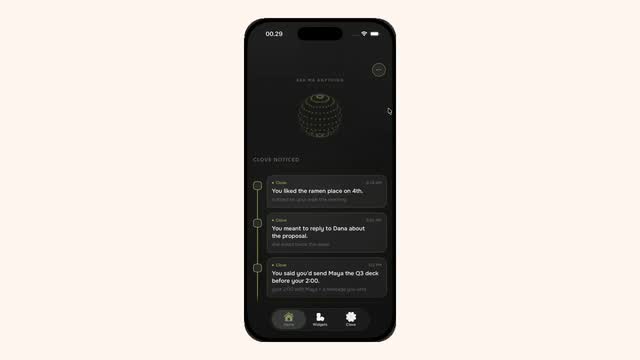
Designing the HUD interface + shipping the iOS companion app
Founding Design Engineer0 to 1

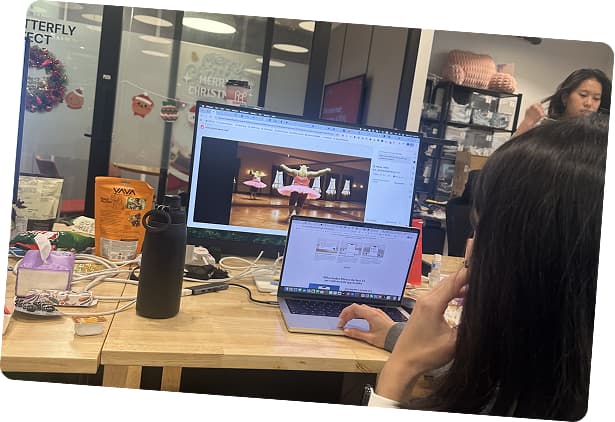
Over winter break, I interned at Manus AI, a general AI agent that was growing faster than its users could keep up with. As the agent became more intelligent, it became harder for everyday users to understand, adopt, and actually leverage it. With the newly launched version of Manus 1.5 Max, feature depth was outpacing user comprehension, and the existing community was a static archive no one was navigating.
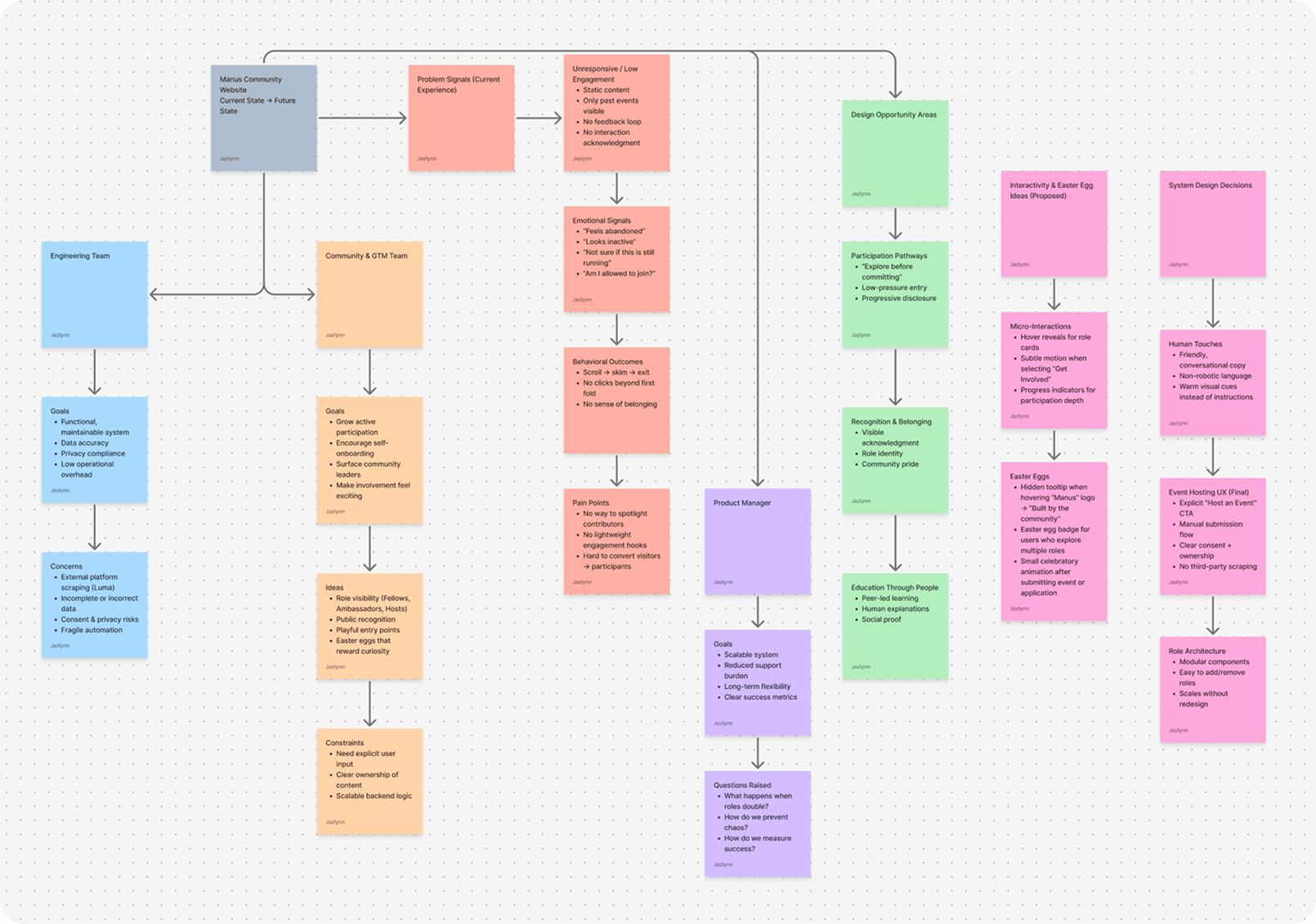
I led the end-to-end redesign of the Manus Community. This consisted of not just a visual refresh, but a re-architecture from passive content IA to an AI-guided learning system that scales alongside both the product and its users.
My Role
Leading user research, architecting the design system, user flows, and interaction mechanisms, and ideating our UI features.
3 months
1 Product Designer (me!)
1 Co-Founder CMO
2 Engineers
2 PMs
1 Business Strategist
Results
Problem
Manus AI was becoming one of the most capable AI agents on the market. But capability created a new problem: cognitive load. The more the product could do, the harder it was for non-technical users to figure out where to begin, what was possible, and how to meaningfully participate in the community surrounding it.
The community platform that existed was designed for a simpler product exploration and discovery of its features. It had static archive of past events and content with no clear pathways, no progression, and no sense of where a new user should even start.
Solution Preview →
User lands on community
AI infers role & builds their path
Explores personalized recommendations
Users grow alongside Manus
Initial Pivot
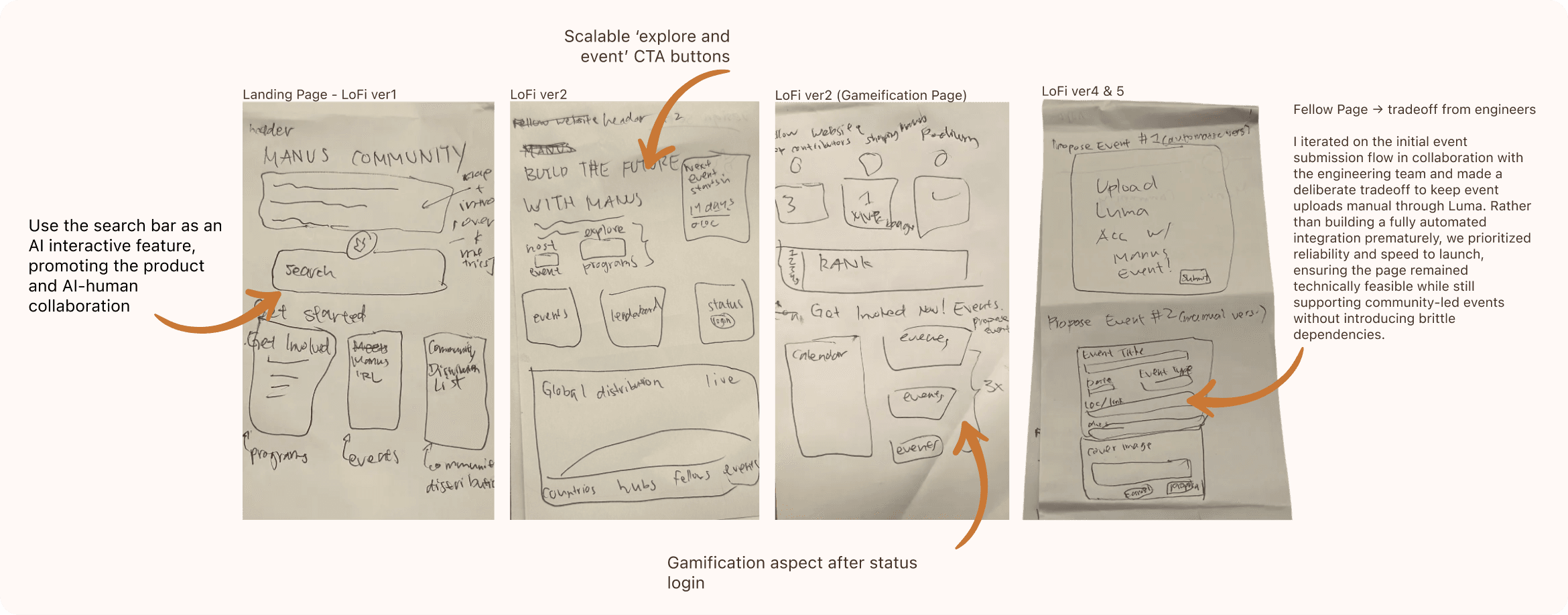
We started by assuming the problem was motivation. If people weren't engaging, we thought gamification such as: points, levels, quests, would get them moving. We built toward it.
User testing showed that gamification was cognitively overwhelming. It added friction of top of an unclear system, as participants reported confusion around navigation, role progression, and what the game mechanics were for. This led us to pivot to a scalable, human-centered community system.
*I built the early prototype using Lovable for rapid usability feedback.
Research
“I've been using Manus for weeks, but some days I still can't figure out what new things upgraded. The community is filled with posts, but I have no idea what I missed past events.”
“I opened the community page and just scrolled. There was a lot, but I didn't know where to start or what was for me.”
“I want to contribute and share what I've built, but I have no idea if anyone will see it or if it even matters. There's no feedback, no signal that my work is visible.”
Drag or click to cycle through quotes
Cognitive overload averaged across non-technical users who couldn't identify what Manus could do for them specifically.
Community structure felt like a static archive, leading users to disengage within minutes of arriving.
Users wanted to contribute but had no clear pathway to do so, leaving them passive instead of active.
Community Newcomers (5)
Power Users (8)

Age: 22–35
Doesn't know where to start or what Manus is capable of doing for them.
Wants to learn fast, find relevant opportunities, and get value quickly.

Age: 25–40+
Has no structured way to surface or share their work meaningfully.
Wants visibility and credibility for their contributions within the community.
Finding the Gaps in the Market →

Fast, informal interaction
Knowledge fragments instantly
No durable contribution tracking

Short-term engagement spikes
Incentivizes activity over impact
High cognitive load

Structured and searchable
Low participation, slow feedback
Not built for fast updates
How might we... make AI capabilities legible to everyday users?
How might we... turn passive members into active contributors?
Development
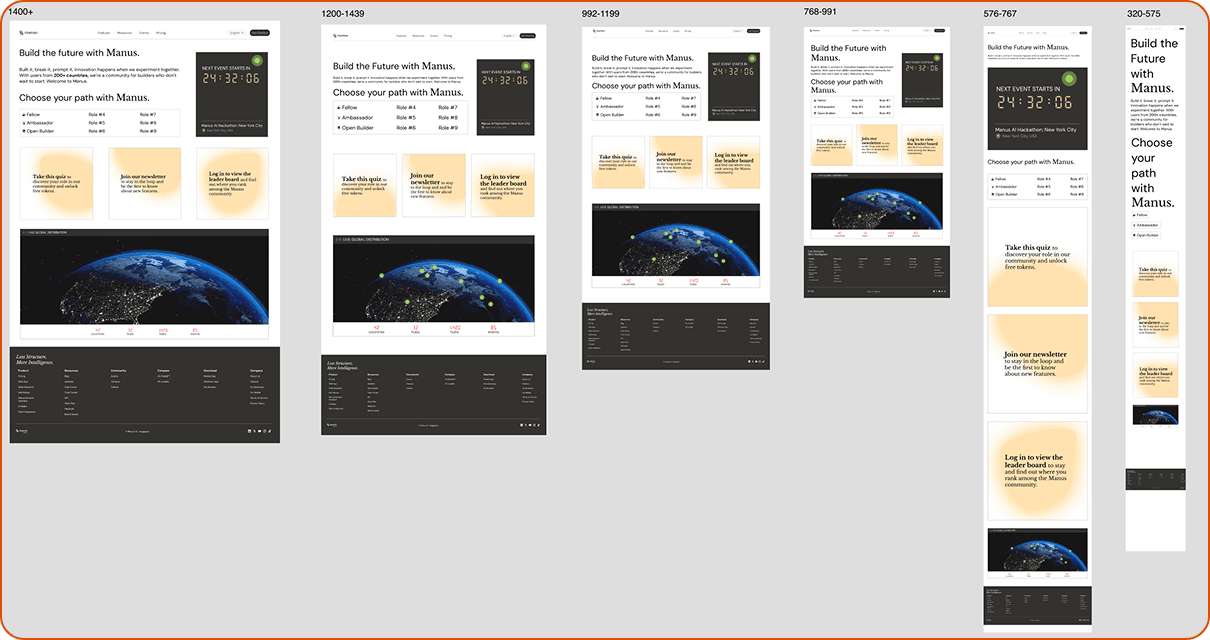
Second Approach HiFi Specs
After internally launching the static experience, we ran a third round of usability testing. 7 out of 10 users disengaged quickly. But the more revealing finding wasn't that they left, it was where they lingered before leaving.
Users spent significantly less time on the role selector and the three-card feature section, and disproportionately more time on the Global Distribution map and the Next Hackathon countdown. Both were the only two elements with motion: the map was pulsing, the countdown was live.
This told me two things: the information architecture needed realignment and users were drawn to interactivity that felt personally relevant and alive. Immediately, I began another round of iteration for longer time-on-page.
Testing
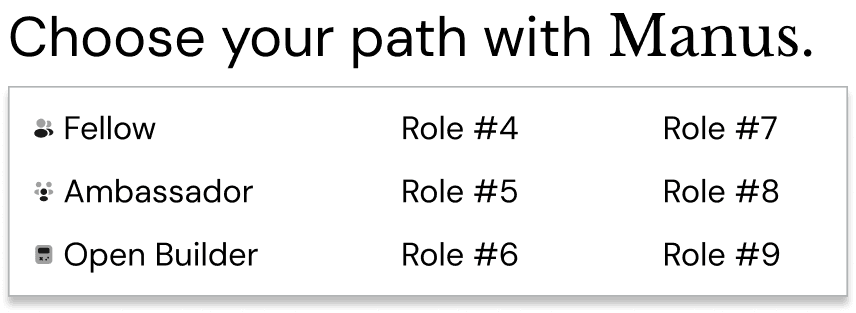
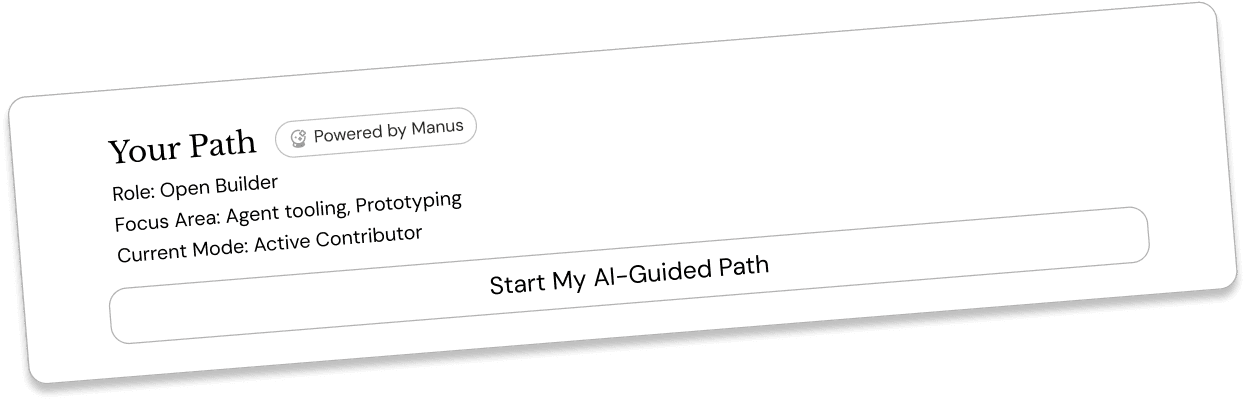
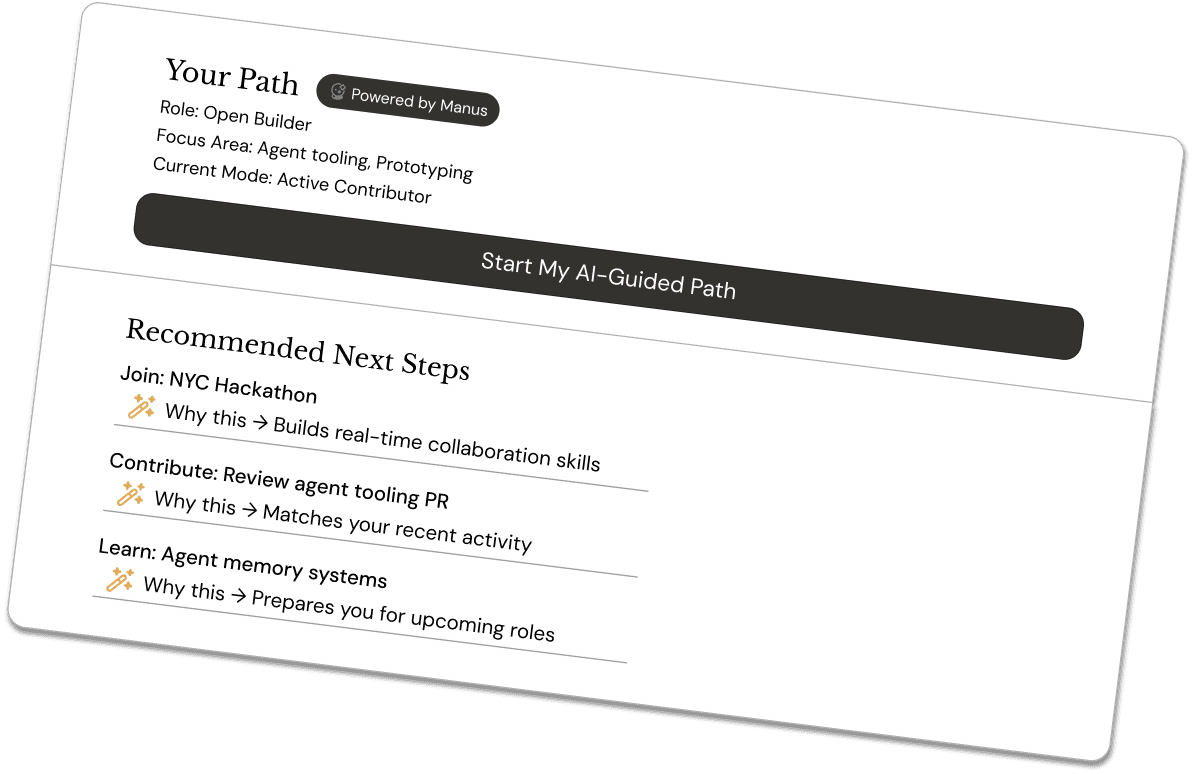
Based on 8 usability tests, I found that “Start My AI-Guided Path” CTA had highest click-through of any version tested. This was telling to me, because I pulled inspiration from RPG-style gamification. Instead of assigning users a generic role, the system treats each user as a character with their own stats, focus areas, and progression mode, making the community feel like a world they’re actively moving through, not a page they’re passively browsing. The “Powered by Manus” tag was a detail the founder specifically liked, because it demonstrated the product’s own intelligence working natively inside the community experience.
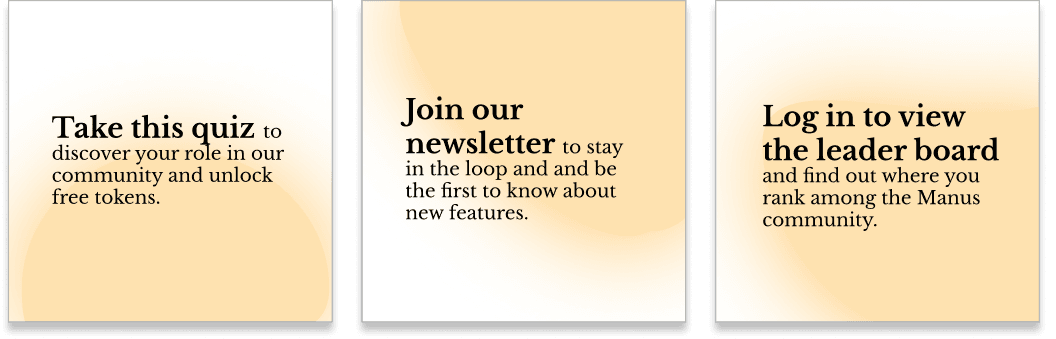
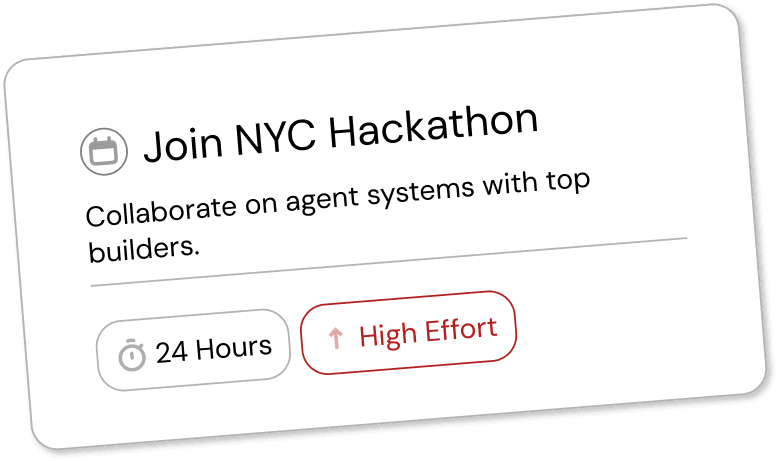
After presenting my previous design to my PM, she mentioned that they were planning to add more community roles in the future. The system needed to be scalable. The original design used a fixed 3-card layout; one card per featured opportunity. It worked for the current three roles, but I realized it would break the moment the community team launched a new one.
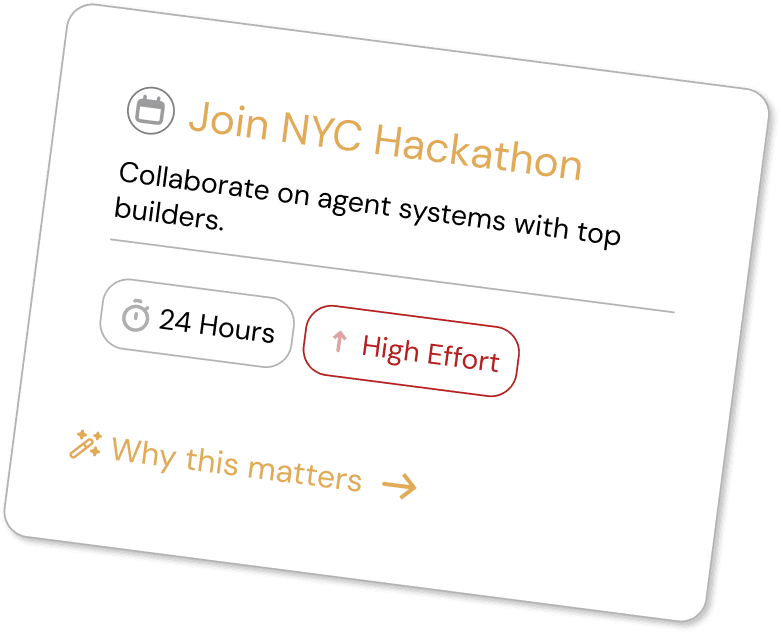
Every new role, Campus Leader, Ambassador, Regional Hub, would require a manual design update. I redesigned the recommendations layer to be role-agnostic and AI-driven, so that when users log into Manus, the “Powered by Manus” inference layer immediately surfaces what’s relevant to them specifically, whether that’s a hackathon, an ambassador program, or a role that doesn’t exist yet. The system scales with the community.
Solution
1
A single home for everything a Manus user needs to know, do, and track. Instead of navigating between scattered pages, users land on a dashboard that orients them immediately: their role, their active path, upcoming events, and pending contributions all visible in one place. Reminders surface when something needs attention. Nothing gets missed because nothing is buried.
2
The “Your Path Powered by Manus” feature infers each user’s role, focus area, and current mode from their behavior, then generates a guided next step tailored to them specifically. Instead of browsing a generic feed, users are met with “Recommended This Week. Prioritized by fit. Not engagement.” Every recommendation surfaces with a “Why this matters →” explanation so users always know the reasoning behind what they’re being shown.
3
The original design locked community opportunities into a fixed 3-card layout with one card per role. Every new role the community team launched would require a manual design update. The final system is role-agnostic and AI-driven: when users log into Manus, the inference layer immediately surfaces relevant opportunities whether they’re interested in hackathons, ambassador programs, campus leadership, or roles that don’t exist yet. The community scales without the design breaking.
Retention increased from ~30% to 65-70% following rollout of the AI-guided architecture.
Time-on-site increased by ~2.1×, indicating deeper engagement with paths, events, and recommendations
80% of users reported improved clarity around where to start and how to contribute meaningfully.
Following the rollout, users specifically cited personalized paths, contextual recommendations, and “why this matters” explanations as the primary reasons they felt motivated to stay and continue engaging. 75% described the experience as more “personally relevant” compared to the static version.

Increase transparency in AI decisions by adding lightweight user feedback

Tracking time-to-first-meaningful-action for actual contribution

Finish up development and launching!

I design better than I summarize.
Let's fix that over a call or interview. Reach out here.