



MANUS AI (ACQUIRED BY META) - NO. 01
Designing an AI community platform to drive adoption
InternshipApproved & In Dev

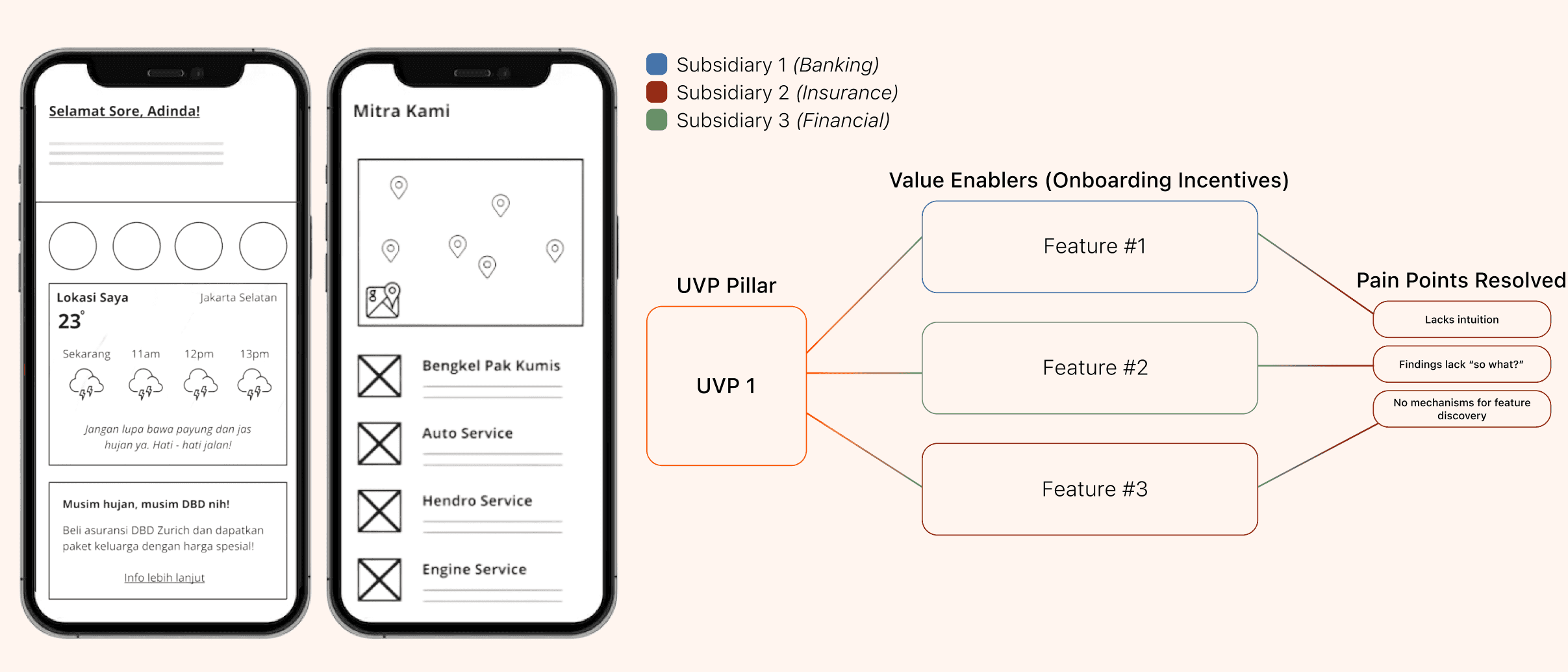
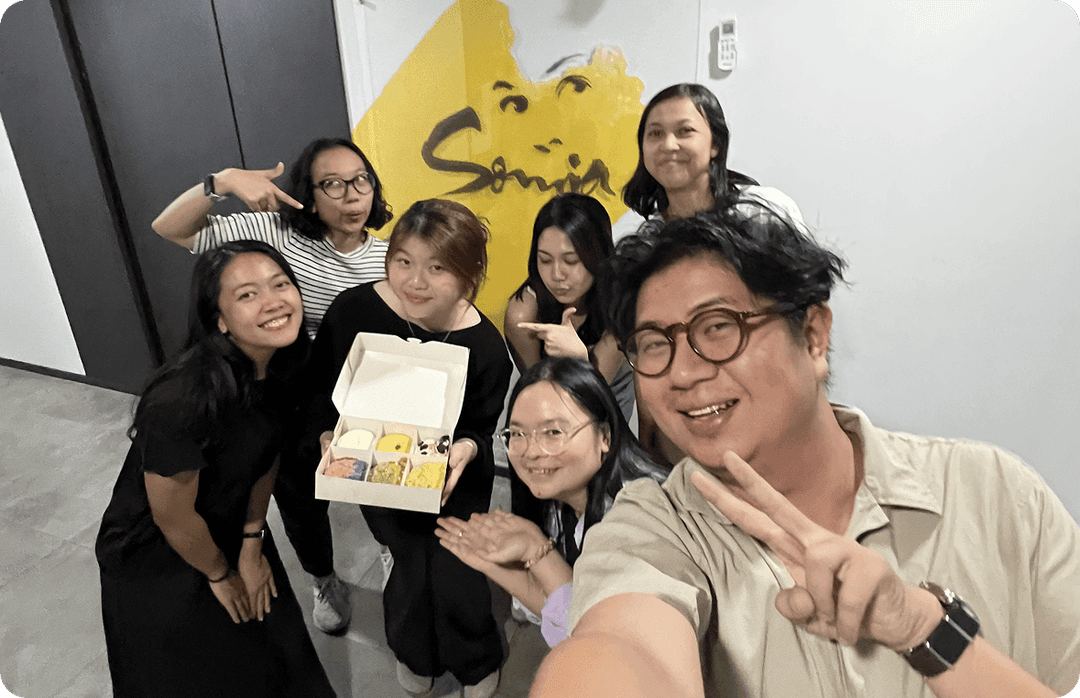
My first product internship!! I interned at SomiaCX as a UX Designer, embedded inside a project for MUFG. They have three separate subsidiaries (a bank, an insurance company, and a vehicle financing arm) that were being merged into one unified financial app. Each had different users, different revenue models, and different internal teams who didn't always agree on what the product should do.
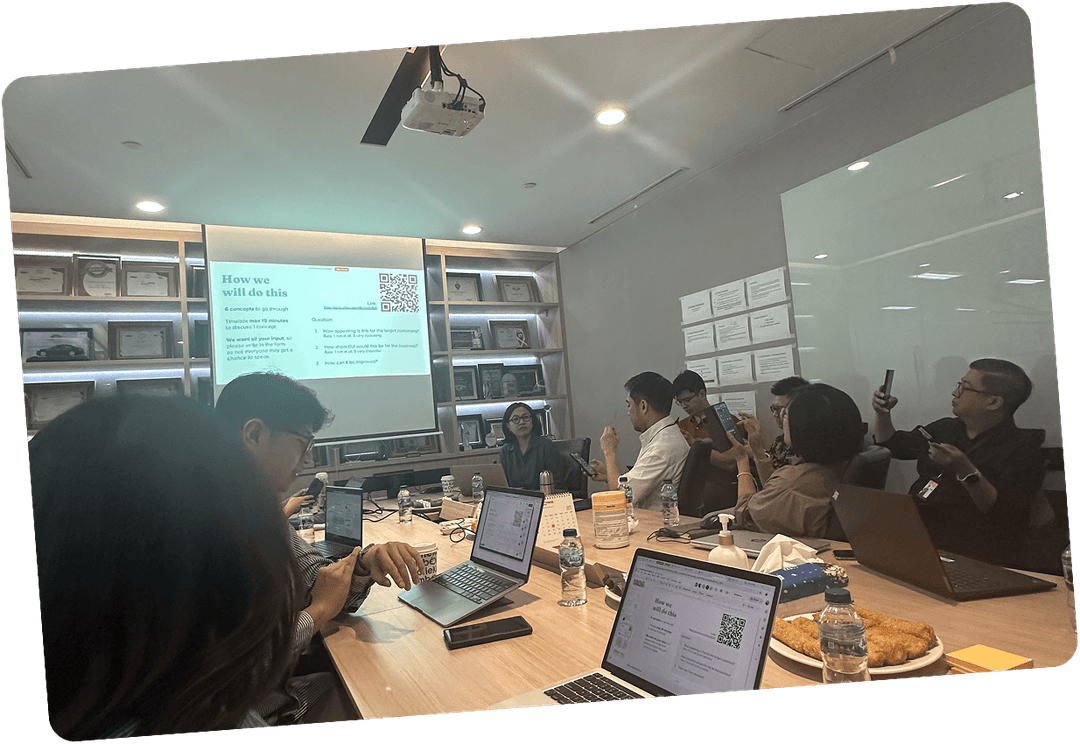
I worked on the UVP architecture that would hold all of it together, a shared value framework that made each subsidiary feel coherent, not competing, and that served an incredibly diverse user base, from upper-income urban professionals to low-income, unbanked Indonesians with no digital literacy. By the end of this project, I had the chance to present to our stakeholders.
My Role
UX Designer, conducting market research, product alignment, UVP architecture, LoFi & MidFi prototyping.
3 months
1 Founder
1 PM
2 UX Designers (me!)
1 SWE
1 UI Designer
Results— Backed by final assessment from subsidiaries' report
Problem
*Due to tight NDA restrictions, I can't show certain end products.
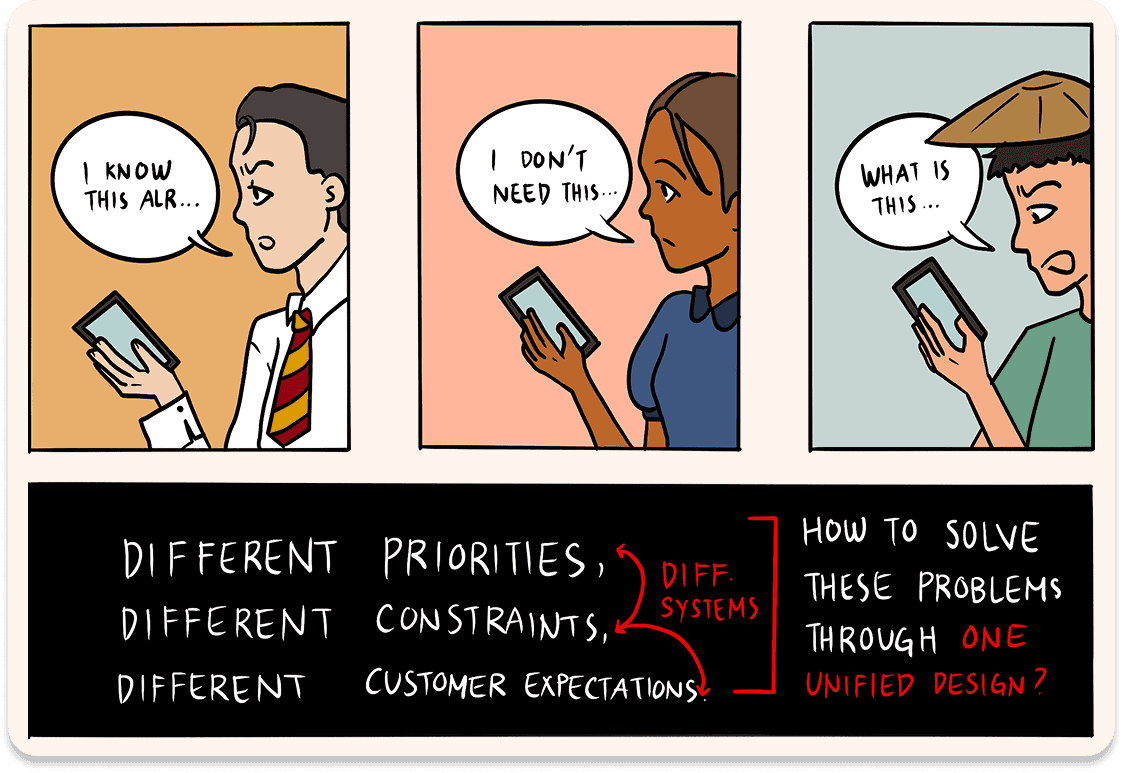
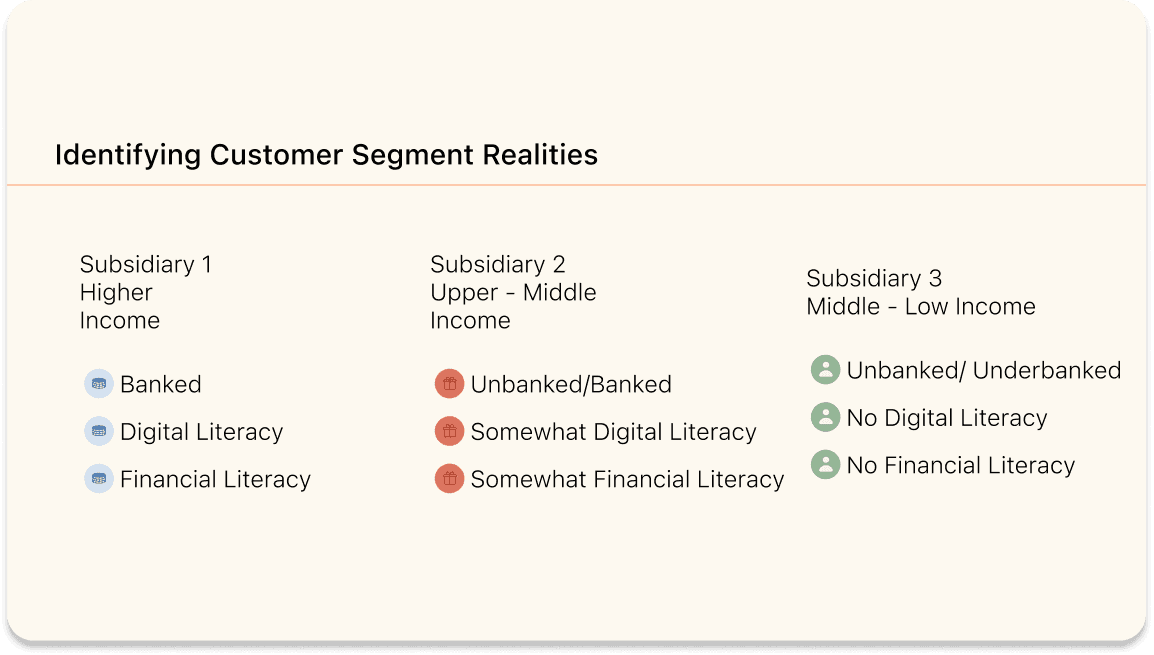
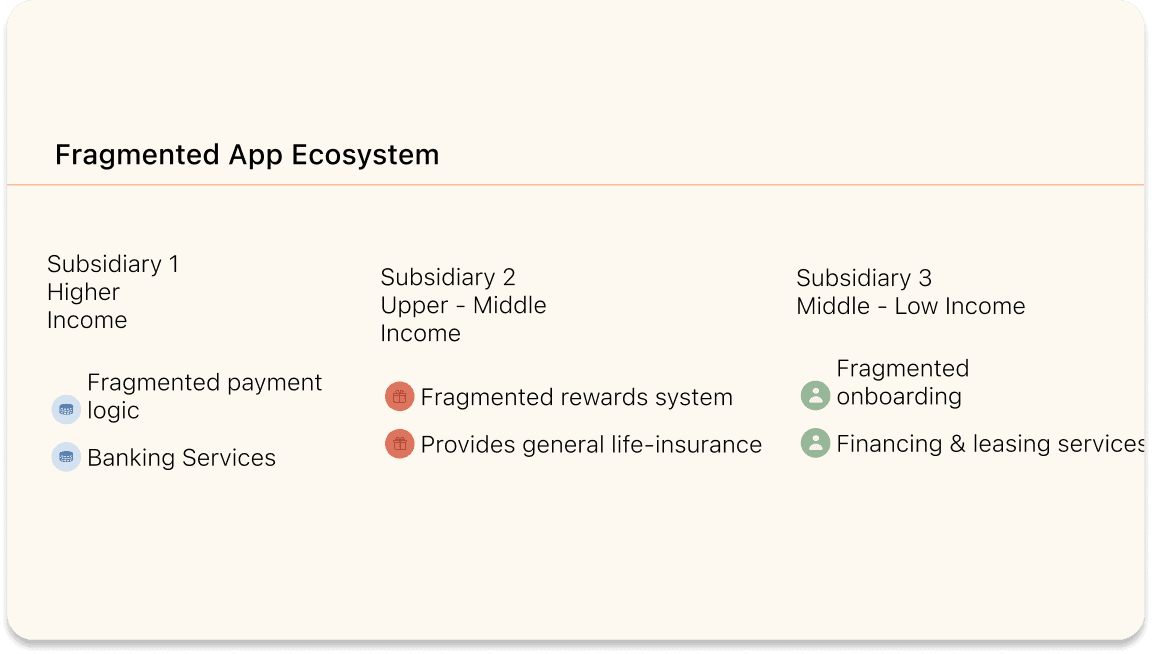
MUFG's three subsidiaries had been operating independently for years, each with its own product logic, its own users, and its own definition of what "financial services" meant.
These three groups had almost nothing in common: different income levels, different relationships with technology, different mental models of what a financial app was even for. Yet all three were expected to converge inside a single unified ecosystem. That's when the real problem became clear: this wasn't just a design challenge. It was a product strategy, stakeholder alignment, and cultural inclusion challenge all at once.
Solution Preview →
User discovers the app
UVP system shows their financial path
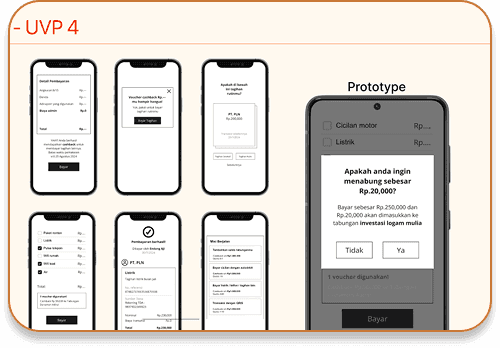
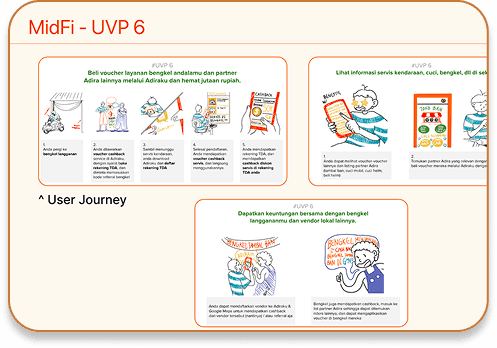
Explores personalized financial features
Users grow financial confidence with MUFG
Research
I conducted further analysis from company-shared private datasets (marketing, financial, and customer intelligence), and extensive desk research to really understand the problem.
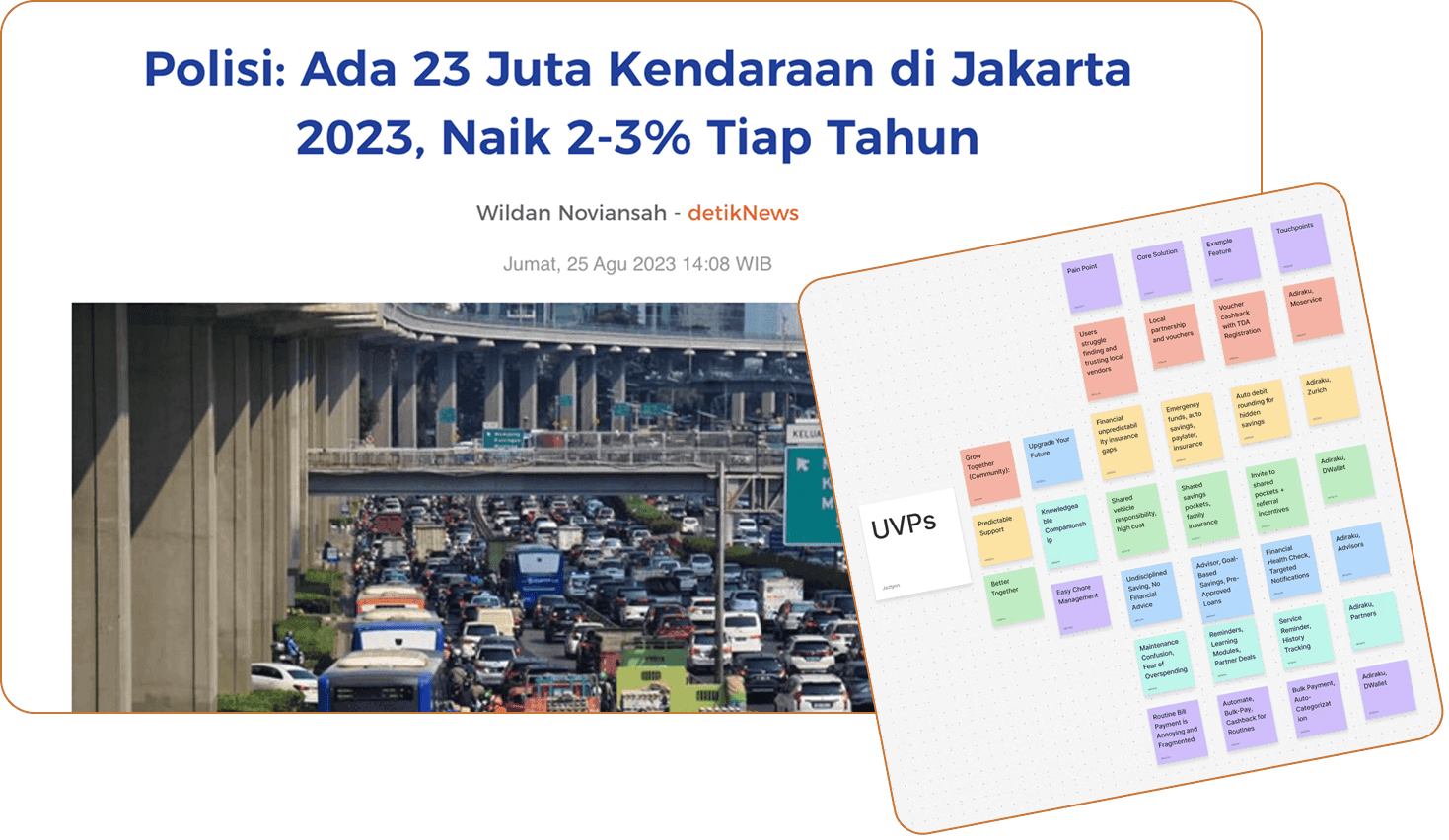
At the end of 2023, Indonesia had approximately 132.43 million motorcycles and 17.17 million passenger cars. Beyond pure numbers, vehicles in Indonesia carry deep cultural weight. Vehicles are social signals, shared family assets, and often the single largest financial commitment a household makes. Vehicle financing installments touch every one of MUFG's three subsidiaries, and every one of their user segments.
It was the cultural anchor the unified experience needed.
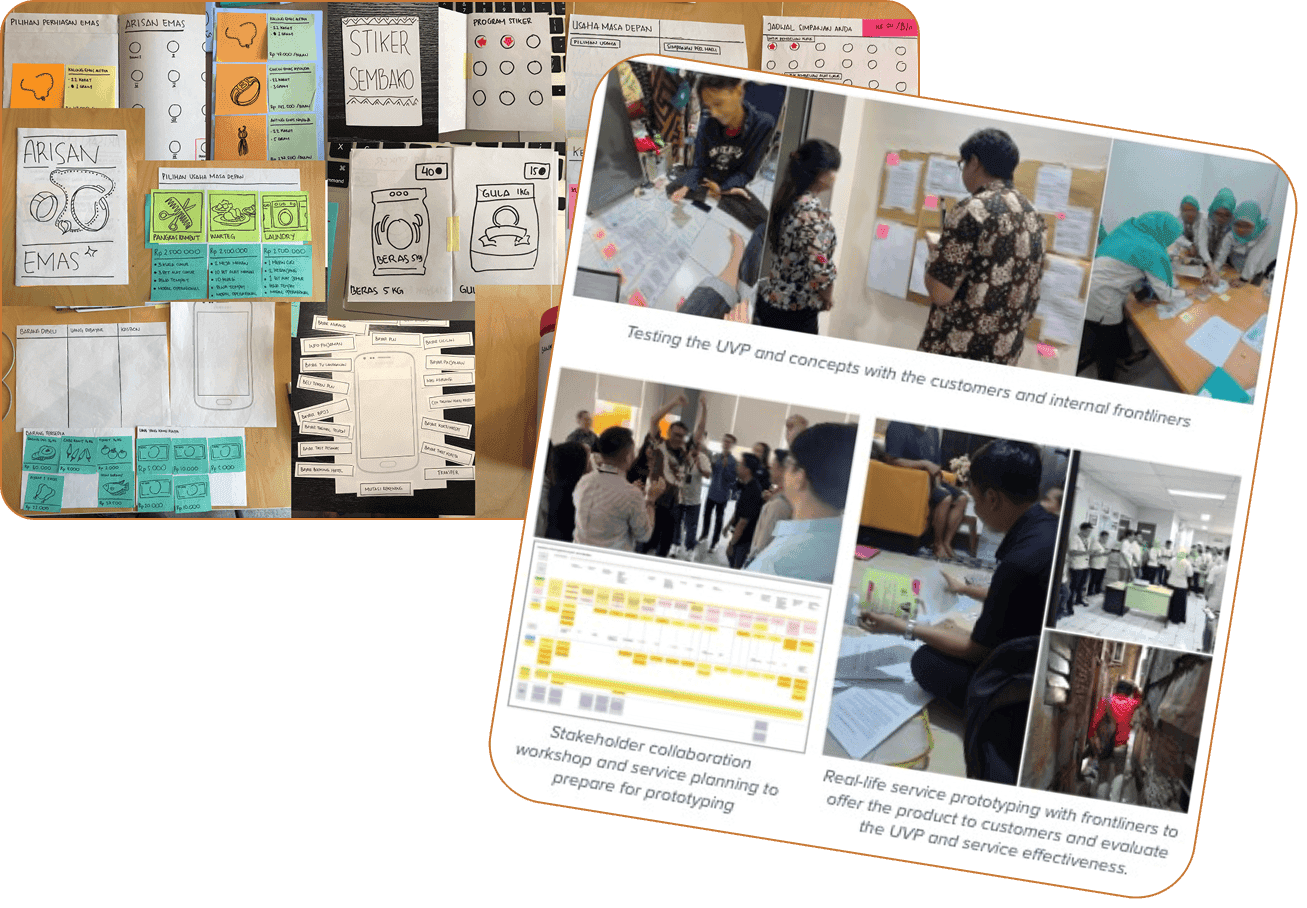
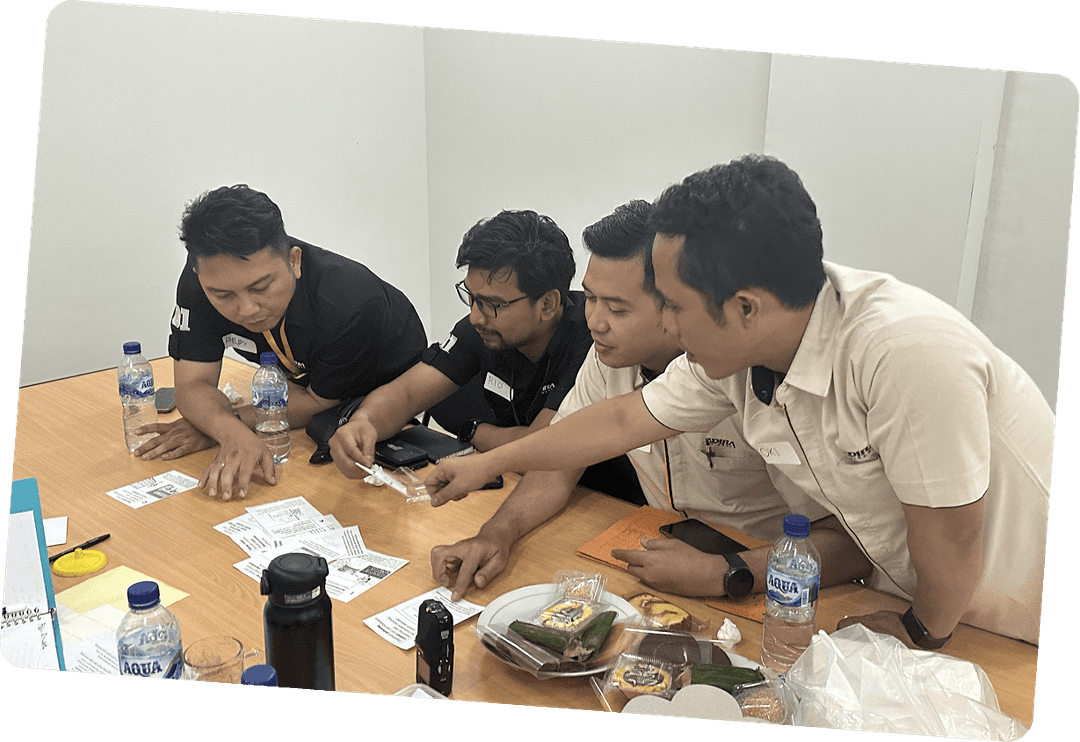
I created sacrificial lo-fi concepts and took them directly into the field and to branch offices.
Finding Gaps in the Market →
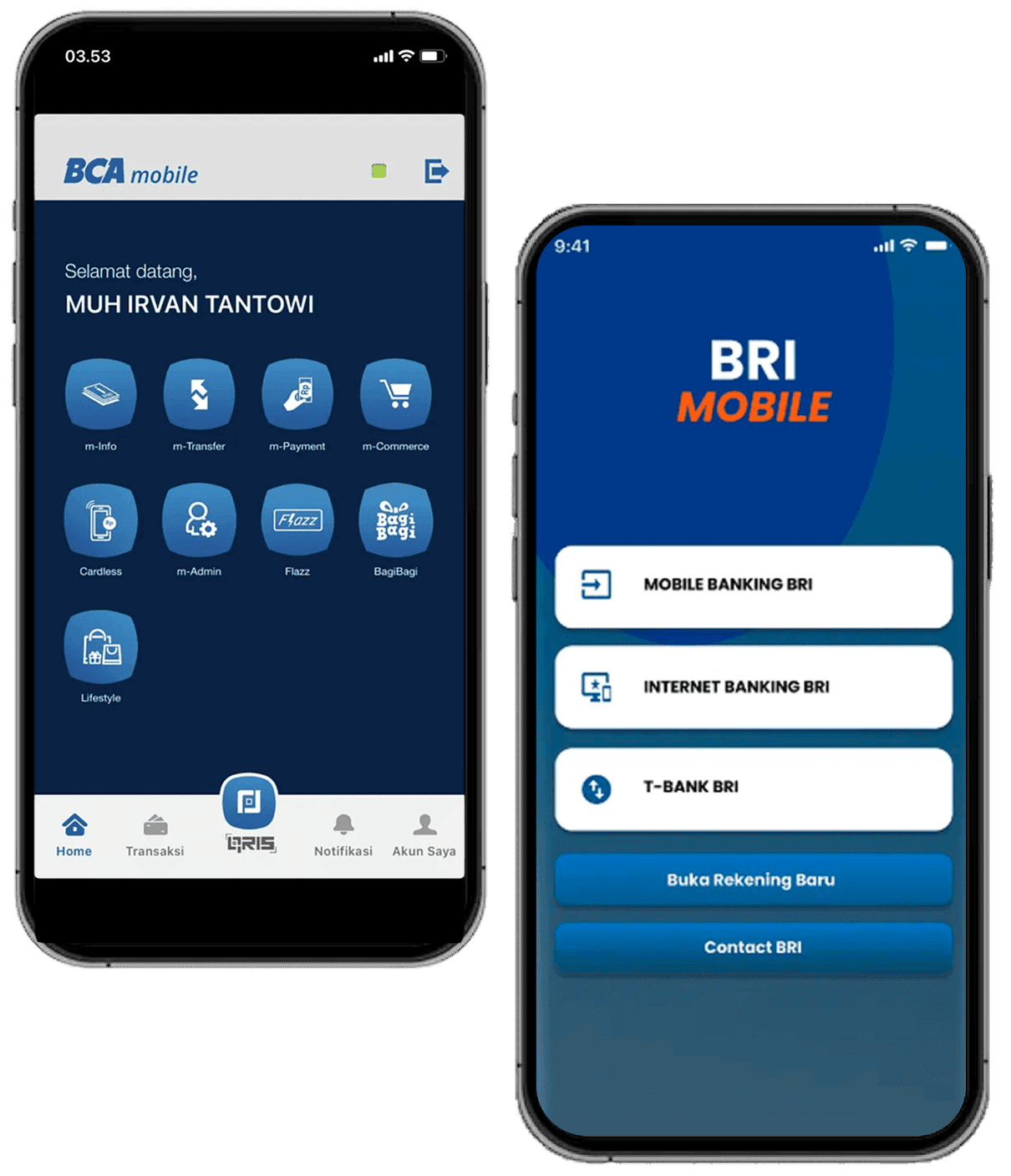
Internal conflict with no visible unity. This is not user-friendly, especially for users who are financially and digitally illiterate.
Relevant financial services that unify all three subsidiaries into one coherent experience.
Users couldn't figure out what to do for next steps.
Relevant financial services that unify all three subsidiaries into one coherent experience.
Data without meaning.
Tie incentives to a culturally relevant commonality.
Blue color schemes tested as anxiety-inducing.
Micro-joy, cultural warmth, and human tone throughout.
How might we... utilize collectivism as a design principle?
How might we... implement familiarity in innovation?

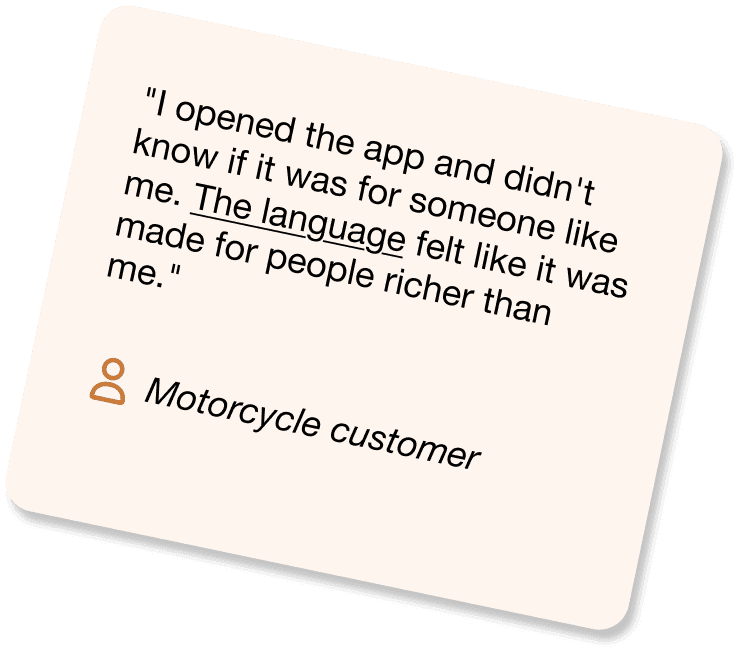
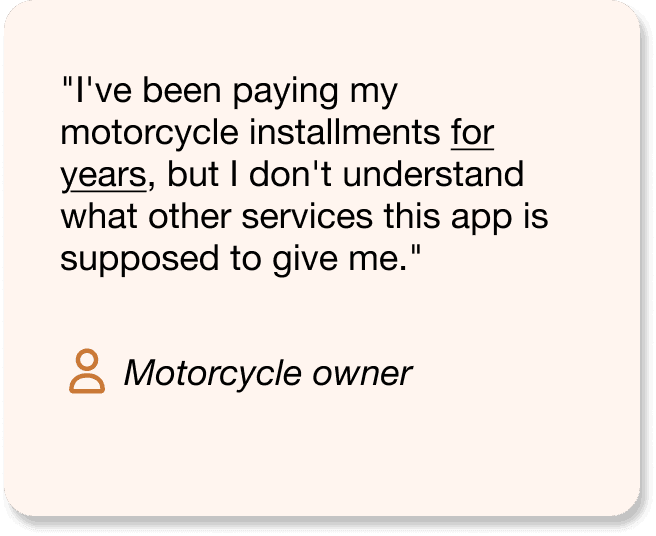
Users across income segments couldn't connect their installment payments to broader financial services available within the same ecosystem.
Lower-income users felt the product tone and language created distance. It didn't feel made for someone like them.
Internal teams had no unified customer view. Each subsidiary managed users independently, making holistic service slow.
Motorcycle owners
Income: ~$193–$1,290/month
Pays installments regularly but doesn't know what other financial services they qualify for within the same app.
Wants to understand the total cost of vehicle ownership without going to a branch every time.
Car owners
Income: ~$320–$1,290+/month
Manages banking and financing separately; no single view of their full financial picture.
Wants one place to track installments, insurance, and savings without switching between apps or branches.
Internal subsidiary team
Income: ~$658–$1,290+/month
Each subsidiary operates its own system. No shared logic, no unified customer view across the three.
Wants a platform architecture that lets them serve customers across subsidiaries.
Development
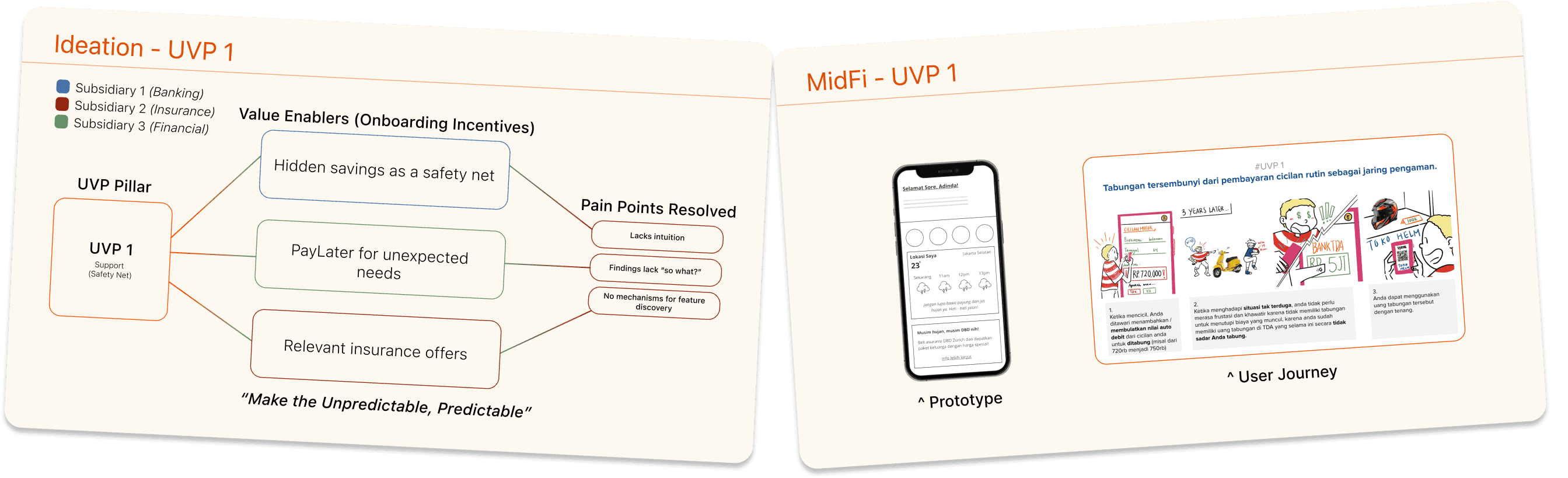
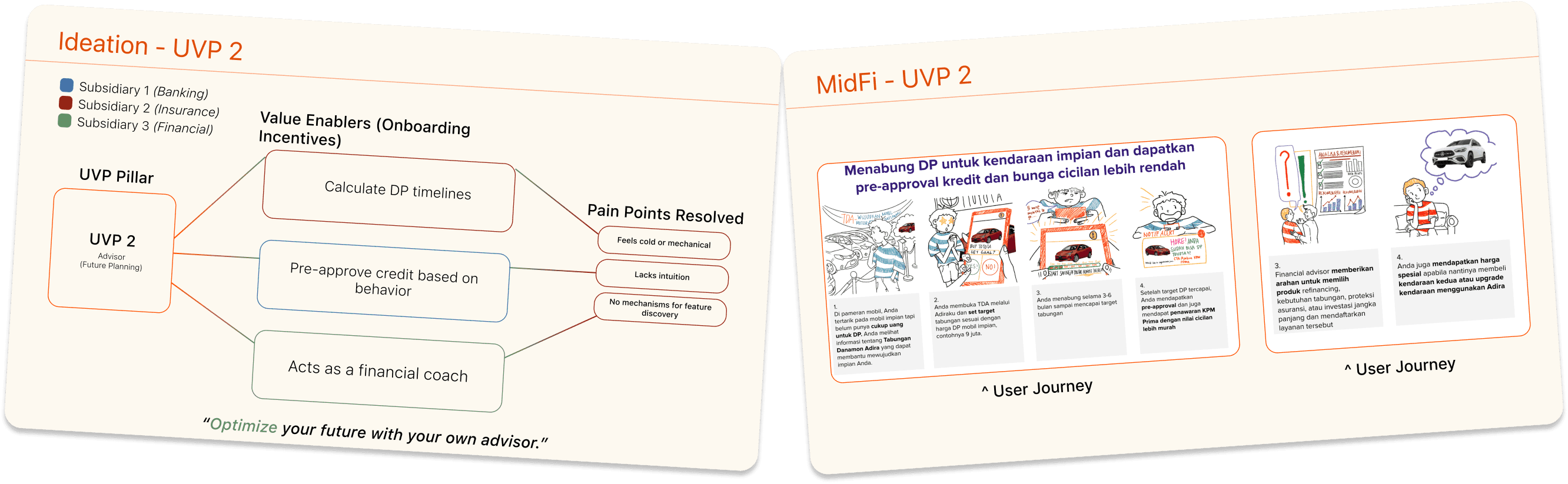
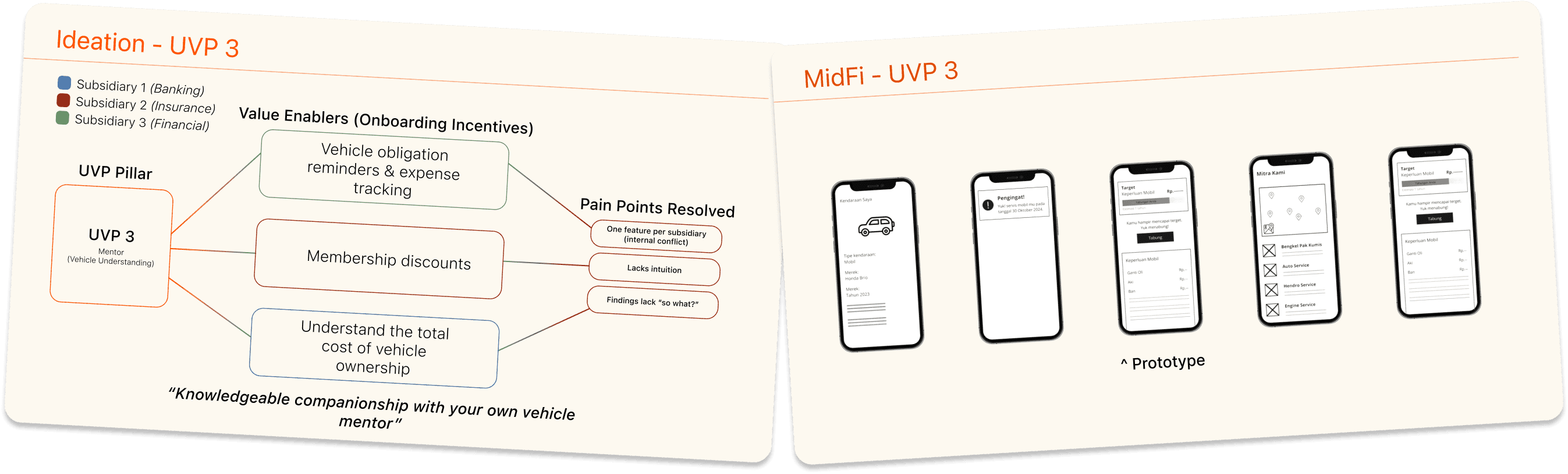
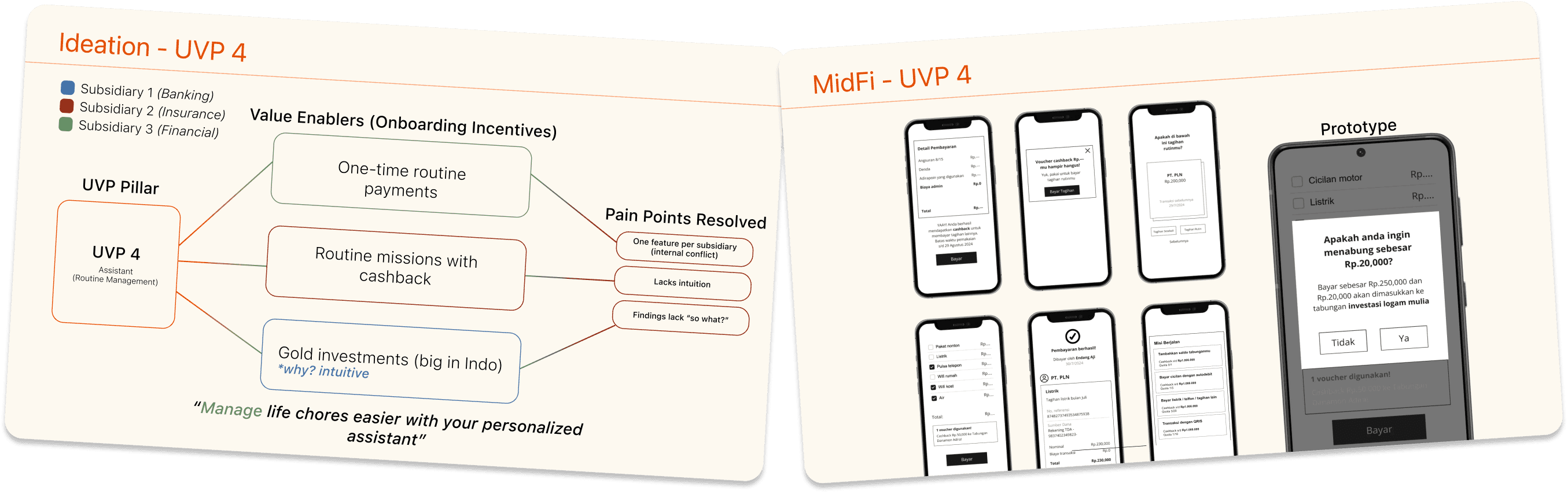
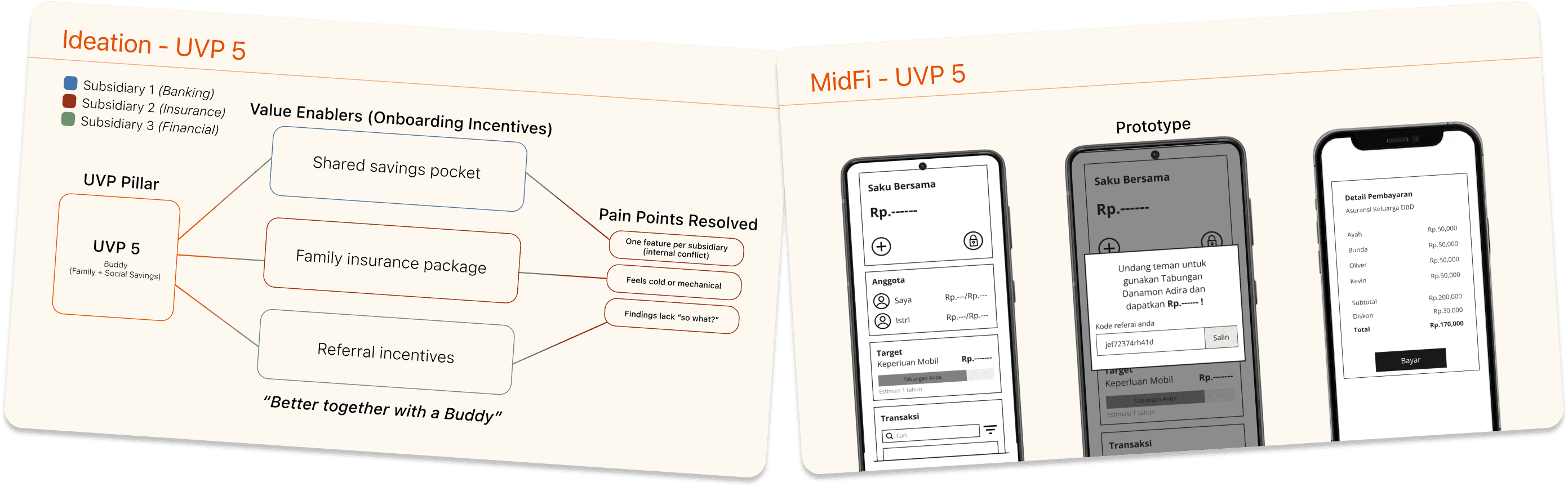
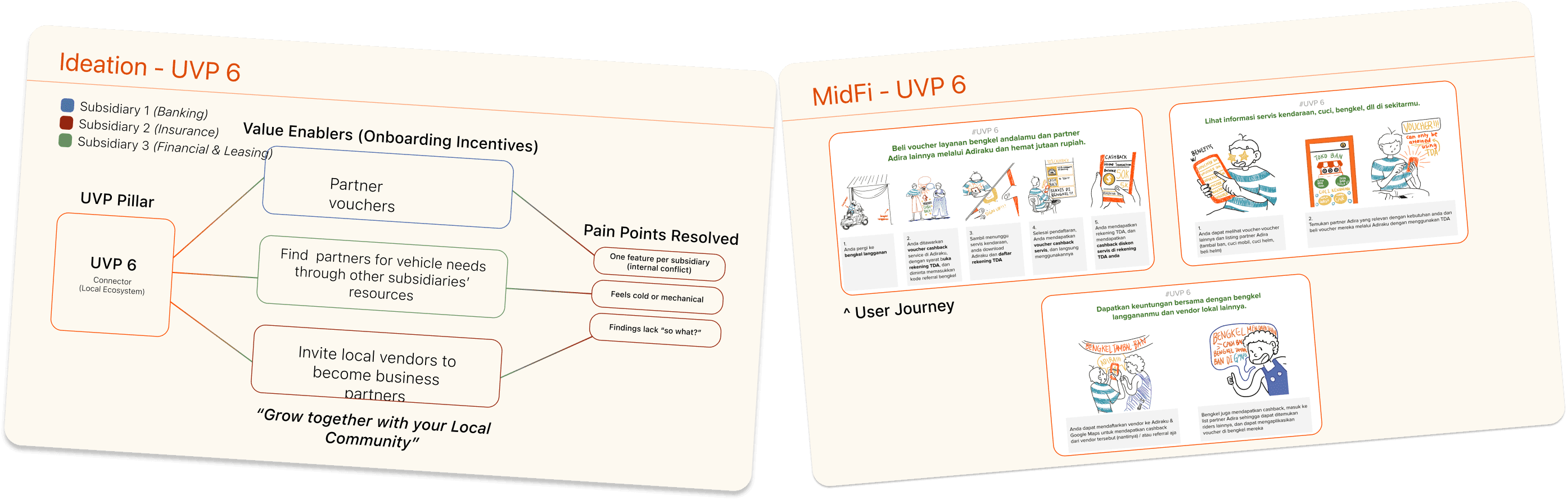
Solution
UVP 1
Support
(Safety Net)
UVP 2
Advisor
(Future Planning)
UVP 3
Mentor
MERGE WITH UVP 4
UVP 4
Assistant
(Routine Management)
UVP 5
Shared Wallet
LOW ROI
UVP 6
Local Investment
MISALIGNED KPI
After presenting all six pillars, stakeholder feedback forced hard prioritization.
Four pillars moved forward. Two were cut.
First-round UVP testing, backed by the subsidiaries' final assessment report, showed an 18% reduction in user friction and support tickets.
Culturally grounded design choices resonated in testing across income and literacy levels, showing a retention rate of ~72% across onboarding flows.
Projected ~25% reduction in branch visit dependency as users reported feeling confident navigating financial decisions independently.
I also learned that sometimes it's okay to say no to stakeholders. Clarity under stakeholder pressure is a design skill. When everyone is asking for more, the ability to say "this specific thing, done well, serves the goal better than adding another feature" requires both research grounding and confidence in the process. This is the type of skill I couldn't have learned from the books.

Hand off to design and dev team

Longitudinal testing of the personalization layer to validate UVPs

Realign with stakeholder needs

I design better than I summarize.
Let's fix that over a call or interview. Reach out here.